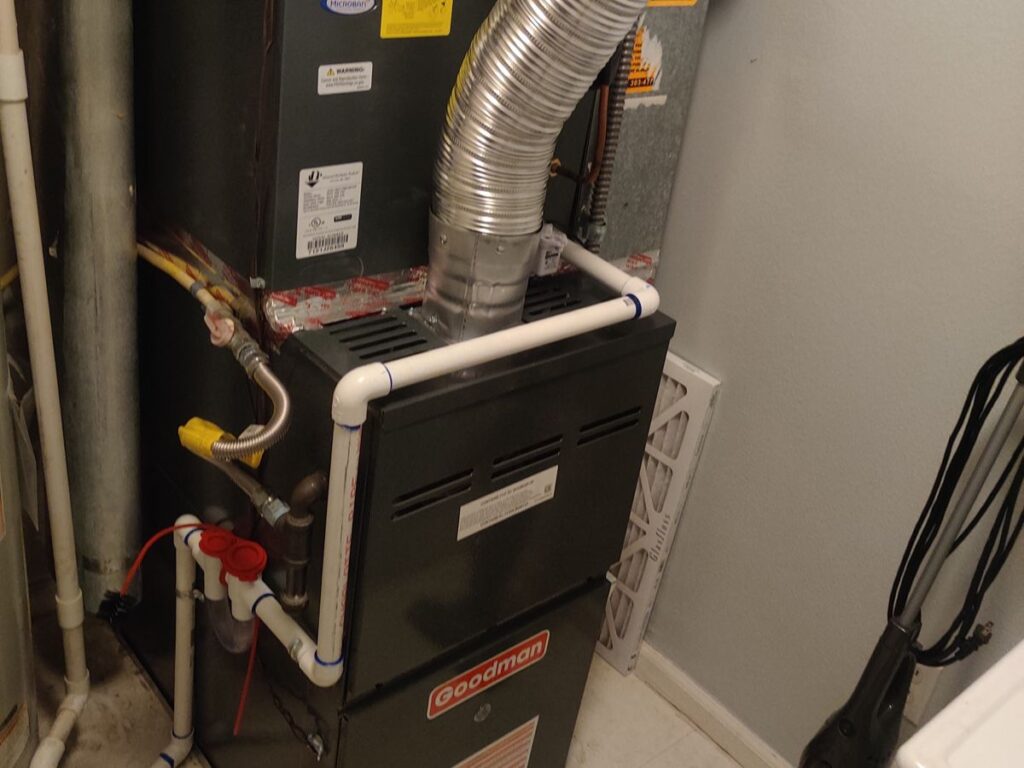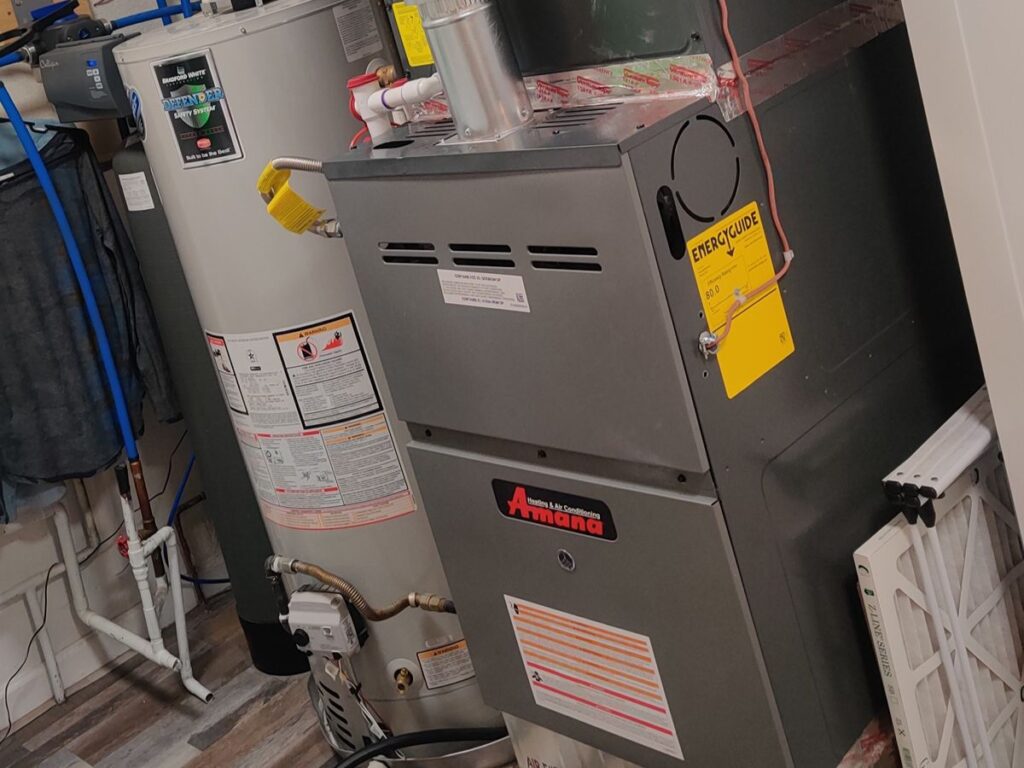
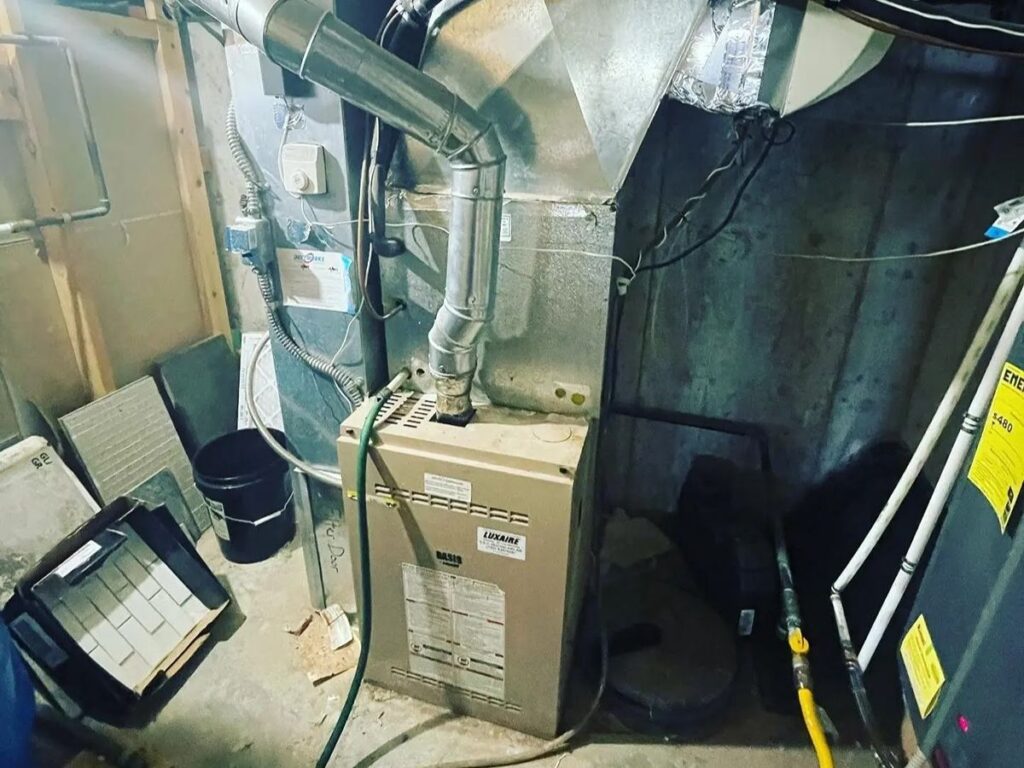
Colorado’s big 2026 change is an emissions rule, not an efficiency mandate. Under state House Bill 23-1161, the law says that starting January 1, 2026, new gas furnaces and water heaters offered for sale or lease in Colorado have to meet ultra-low NOx emission limits. For a Castle Rock furnace, that limit is 14 nanograms of NOx per joule of heat output, or the unit has to carry a qualifying ENERGY STAR certification.
If you own a home here in Douglas County, this is the question we hear most often when a furnace starts acting up in the middle of a cold snap: does the new law force me to do something right now? The short answer is no.
The rule targets what manufacturers and suppliers can sell as new equipment in Colorado. It does not reach back to the furnace already running in your basement. You are not required to replace a working unit just because the calendar flipped to 2026, and repairs to your existing furnace are still fully allowed. Where it actually shows up is at the moment you go to buy new, whether that is a planned upgrade or an emergency changeout on a January night.
NOx matters more in Colorado than in a lot of places, which is part of why the state acted. Nitrogen oxides are a byproduct of burning natural gas, and they feed ground-level ozone and smog along the Front Range, an area that has struggled to meet federal air quality standards for years. Castle Rock sits right in that corridor, so cleaner-burning home equipment is meant to chip away at a real regional problem.
What are the new requirements for new furnaces in Colorado?
Any new gas furnace sold or installed in Colorado on or after January 1, 2026 has to meet one of two paths: it has to hold emissions at or below 14 nanograms of NOx per joule, or it has to be ENERGY STAR certified. That is the whole test at the state level. It is an emissions standard, so do not let anyone tell you the 2026 law itself requires a 95% AFUE furnace, because efficiency and emissions are two different measurements.
The law does not ban natural gas, and it does not ban gas furnaces. What it does is change which models can legally enter the Colorado market as new equipment. The legislative text is direct about the scope: it prohibits selling or leasing a new water heater or fan-type central furnace unless its emissions stay under the set limits. Manufacturers have to prove compliance and label the equipment, and the state can spot-check retailers and distributors to enforce it. For you as a Castle Rock homeowner, the practical effect is that your installer will bring you compliant options when it is time to buy, and non-compliant standard models are no longer a new-install choice here.
What qualifies as a high efficiency furnace?
High efficiency refers to how much of your gas dollar actually turns into heat, measured as AFUE, or Annual Fuel Utilization Efficiency. A 95% AFUE furnace turns 95 cents of every fuel dollar into heat and sends about 5 cents up the vent. Older standard units typically run around 80% AFUE, wasting roughly a fifth of the fuel. High-efficiency furnaces hit those higher numbers with a condensing design and a second heat exchanger that pulls extra heat out of the exhaust.
Here is where people get tangled up, so it is worth being careful. Efficiency (AFUE) and emissions (NOx) are separate specs. The 2026 Colorado rule is about NOx, not AFUE. In practice, many low-NOx models on the market are also high-efficiency condensing units, which is why the two get blurred together. But sources genuinely disagree on whether ultra-low-NOx 80% AFUE furnaces still count as a legal new-install option in Colorado, so we would rather show you the specific compliant models for your home than promise something the market has not settled. If you are weighing an upgrade, our heating services team can lay out the real trade-offs for your setup.
What to consider when replacing a furnace?
Start with the venting. A high-efficiency condensing furnace does not use a metal flue like an 80% unit. It exhausts through PVC pipe and produces condensate that has to drain, so switching from a standard furnace to a condensing one usually means new venting and a condensate line. That is real work, and it affects both the timeline and the price, so it belongs in the conversation up front.
Two more Castle Rock-specific factors: altitude and sizing. Homes here sit well above 6,000 feet, and thinner air changes how a gas furnace burns, so the unit needs an altitude adjustment for safe, correct combustion. Sizing matters just as much. A proper load calculation, not a guess based on the old unit, keeps you from overpaying for capacity you do not need or freezing behind a unit that is too small. Richard K. shared in a Google review that “We had a furnace replaced and would – and have – recommend him and his company to anyone needing HVAC work done”, which is the kind of planned, done-right replacement we aim for. When you are ready to compare compliant options, our furnace installation in Castle Rock, CO page walks through the process, and permits are pulled and handled as part of the job.
One thing coming down the road, separate from the 2026 state rule: a federal standard requires residential gas furnaces manufactured after December 18, 2028 to hit at least 95% AFUE. That one is based on date of manufacture, has no sell-through deadline, and is still tied up in legal challenges, so treat it as what may be ahead rather than a rule in force today.
How much does a new furnace cost in Colorado?
For a furnace-only replacement in Colorado, most homeowners land somewhere in the rough range of $4,000 to $8,500 installed, though a complex job with new high-efficiency venting can run higher. A localized 2026 estimate for the Denver metro area put furnace replacement at roughly $4,700 to $8,450, with most homeowners paying around $6,600, adjusted for local labor and permit costs. Treat any single number as a starting point, not a quote, because sizing, efficiency tier, brand, and venting all pull the price in different directions.
Two Colorado-specific cost notes worth knowing. Industry reporting suggests a compliant furnace can carry a higher up-front cost than a comparable pre-2026 system, mostly from the condensing heat exchanger and the extra venting labor. And as of 2026, utility rebate programs in Colorado favor heat pumps and electrification, so do not count on a rebate to offset a straight gas furnace swap. Because the numbers move with your specific home, a free in-home estimate is the only way to get a figure you can actually plan around.
When your furnace is on its last legs during a cold stretch, the 2026 rules add one more thing to think through on top of an already stressful decision. As a technician-owned, licensed and insured company handling furnace replacement in Castle Rock, we help you sort the emissions rule from the efficiency question, size the right compliant unit for your home’s altitude, and handle the permit start to finish. Reach out to Alpha Air Heating & Cooling at (720) 284-9566 for a free estimate or a diagnostic visit, and we will give you honest options with no pressure.