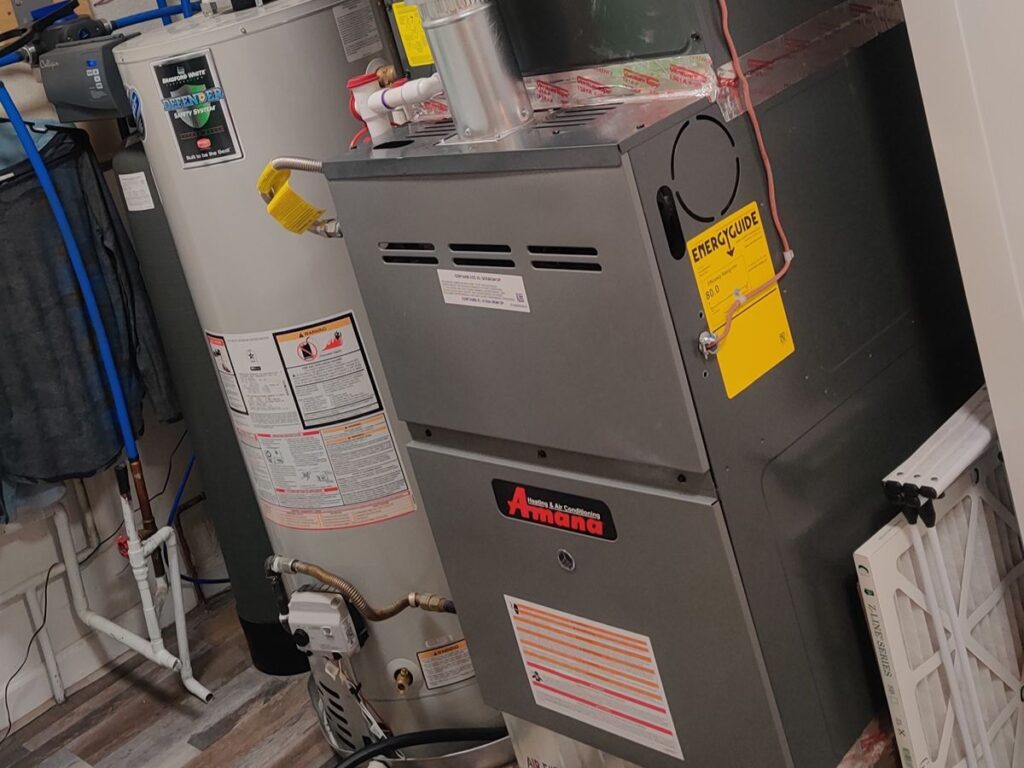
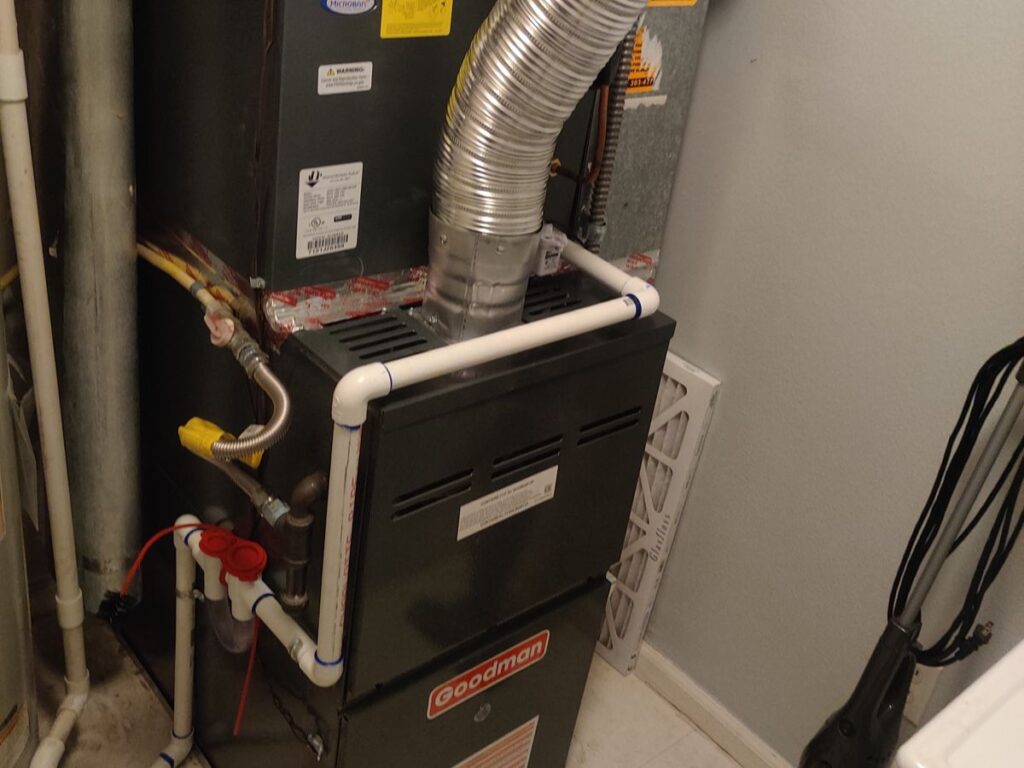
If you see water pooling under your furnace in Castle Rock, the most likely reason is a clogged or backed-up condensate drain on a high-efficiency (condensing) furnace, not a plumbing leak. These units pull so much heat out of the exhaust that the water vapor cools and turns to liquid, and that water has to drain somewhere. When the path gets blocked, it overflows.
Plenty of Castle Rock homes run a high-efficiency condensing furnace, so this is a common call here once heating season gets going. A little water where there should be none is worth checking right away, because it can quietly rust cabinet parts and warp the floor underneath.
A condensing furnace makes real moisture during normal operation. Your heating system collects that water in a trap or small pan inside the cabinet, then routes it through a plastic tube to a floor drain, a utility sink, or a condensate pump that lifts it up and out. When any part of that route clogs, cracks, disconnects, or freezes, the water has nowhere to go and ends up on the floor. The good news is that the fix is usually simple once you know which part failed.
Our long heating season plays into this more than most homeowners expect. A condensing furnace that runs from October into April can put several gallons of water a day through a narrow plastic drain line, and that line only has to close up once to put water on the floor. The condensate is mildly acidic and carries combustion residue with it, so sludge and slime slowly build in the trap and tube, and a cold snap of nonstop cycling is usually when a line that was half-blocked finally backs up. That is a big reason a yearly flush matters here.
Is it normal for a furnace to drain water?
Yes. A high-efficiency furnace is supposed to produce and drain water while it runs, and that is by design, not a defect. Condensing furnaces use a second heat exchanger to squeeze extra heat out of the exhaust, which cools the combustion gases enough that the water vapor in them condenses into liquid.
That liquid is meant to flow steadily through the trap and drain line and out of the house, so a small, quiet trickle you never see is exactly what should happen. A single unit can put out a pint or more of water per hour depending on the model and how long it runs, and on a cold Castle Rock stretch when the furnace cycles often, that adds up fast.
What is not normal is standing water. If you find a puddle on the floor, damp spots around the base, or rust and water stains inside the cabinet, the water is escaping instead of draining. That points to a blockage, a broken or disconnected line, a failed pump, or a trap that dried out and let debris settle. Those need attention, not the drainage itself.
Can a furnace leak water in the summer?
Yes, and in summer the water usually is not coming from the furnace’s own heating operation at all. In most Castle Rock homes the air conditioner shares the same cabinet space and drain, so the evaporator coil that sits on top of the furnace, the drain pan under it, or a whole-house humidifier mounted on the furnace can all send water onto or into the furnace when their own drain backs up.
When your AC runs, the indoor coil pulls humidity out of the air and drips it into a drain pan that feeds the same condensate line the furnace uses. If that shared line or the pan clogs, water overflows right where the furnace sits, so it looks like the furnace is leaking. A humidifier with a stuck valve or a plugged drain can do the same thing.
The takeaway: a puddle in July usually traces back to the cooling side or the humidifier, but it still shows up around the furnace and can rust its base. Whether it is a summer coil issue or a winter condensate clog, the drain path is worth clearing before the damage spreads.
How do I unclog my furnace condensate drain?
Start by cutting power to the furnace at the switch or breaker before you touch anything. Water and live electrical parts do not mix, and shutting it off also stops more water from being made while you work.
Here are the safe steps a homeowner can do:
- Turn off the furnace power first, and keep it off the whole time.
- Wipe up standing water and dry the area so you can see where it is coming from.
- Find the condensate trap and drain tube, usually clear or white plastic near the bottom of the unit.
- Check for an obvious kink, a disconnected fitting, or a tube full of standing water, which points to a clog.
- If there is a condensate pump, look for a full reservoir or a stuck float that shut the system down.
- Loosen the accessible fittings and flush the trap and line with warm water, then a little diluted vinegar to break up sludge and scale.
If the clog does not clear, the line is cracked, the pump is dead, or you see rust and mold inside the cabinet, stop and call a pro. Sludge that has hardened in a trap does not give way to more pressure, and forcing it can crack the trap or push the blockage deeper.
How much does it cost to fix a furnace leaking water?
For most Castle Rock homeowners, fixing a leaking furnace lands on the lower end of furnace repairs because the usual cause is a condensate drain issue rather than a major component. Cleaning or clearing a clogged drain line is often one of the least expensive repairs on the board, while replacing a damaged line or a failed condensate pump costs more since it involves parts.
Most leaking-furnace repairs land in a roughly $100 to $400 range, with a failed condensate pump at the higher end and a simple drain clean-out at the low end. These are general ranges that shift with the exact part, labor, and your specific unit rather than fixed prices.
Cost climbs if the leak was ignored and water rusted the cabinet, damaged the floor, or reached a cracked secondary heat exchanger, which is a far larger repair. That is the real argument for handling a small puddle early. A yearly furnace tune-up that flushes the drain keeps most of these leaks from ever starting, which matters here given how many hours our furnaces run each winter. That kind of furnace maintenance in Castle Rock, CO is the cheapest insurance against a soaked basement floor.
A puddle under the furnace during a cold Castle Rock winter is easy to write off, but that water is usually a blocked condensate drain that will rust the unit and warp the floor if it sits. We handle furnace repair in Castle Rock, CO across Douglas County, from clearing and flushing condensate lines to replacing a failed pump, and every visit starts with finding the real source instead of guessing. As a technician-owned, NATE-certified, BBB A+ accredited shop based right here in Founders Village, we pull the permits as part of the job. To get eyes on your leak, reach out to Alpha Air Heating & Cooling for a free estimate at (720) 284-9566.