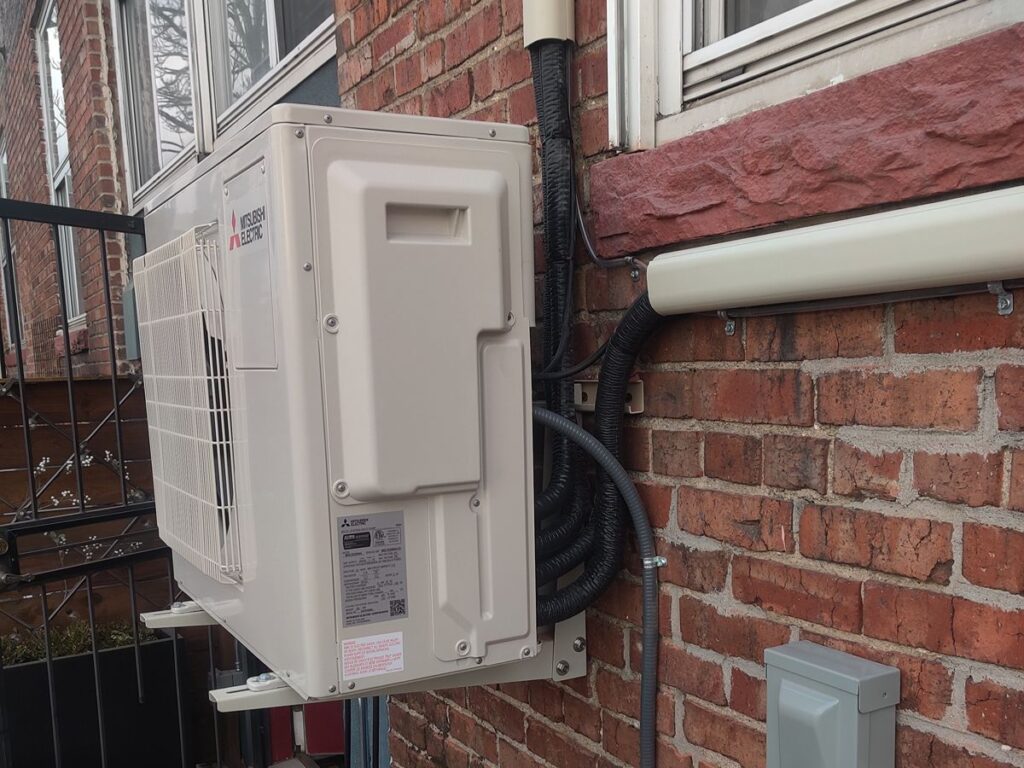
A ductless mini split in Castle Rock almost always needs its own dedicated circuit run from your electrical panel to a disconnect box beside the outdoor unit, and depending on the model, that may mean a new 120V or 240V circuit and sometimes more panel capacity. The exact requirements come off the unit’s nameplate, not a rule of thumb, and the work needs a permit through the Town of Castle Rock Building Division.
Plenty of homes here run into this when they add cooling to a finished basement, a bonus room over the garage, or an addition that the original ducts never reached. The mini split itself is the easy part. The electrical feeding it is what decides how big the job actually gets.
Here is what tends to make Castle Rock different from a blanket answer you would find online. Homes near the historic downtown are older and sometimes still carry 60- or 100-amp service, while newer master-planned builds from the late 1990s and 2000s generally went in with 200-amp service, which had become the standard for new construction by then. Whether your panel has room for one more circuit depends heavily on which of those your home is, and that changes the size and cost of a mini split project before a single line set gets run.
Colorado adopted the 2023 National Electrical Code as the statewide minimum, and Castle Rock enforces the current NEC along with its own adopted building codes. Any new circuit, disconnect, and breaker for your mini split has to meet those rules and pass inspection, which is why the electrical side is worth understanding before you buy a unit.
Can a mini split be plugged into an outlet?
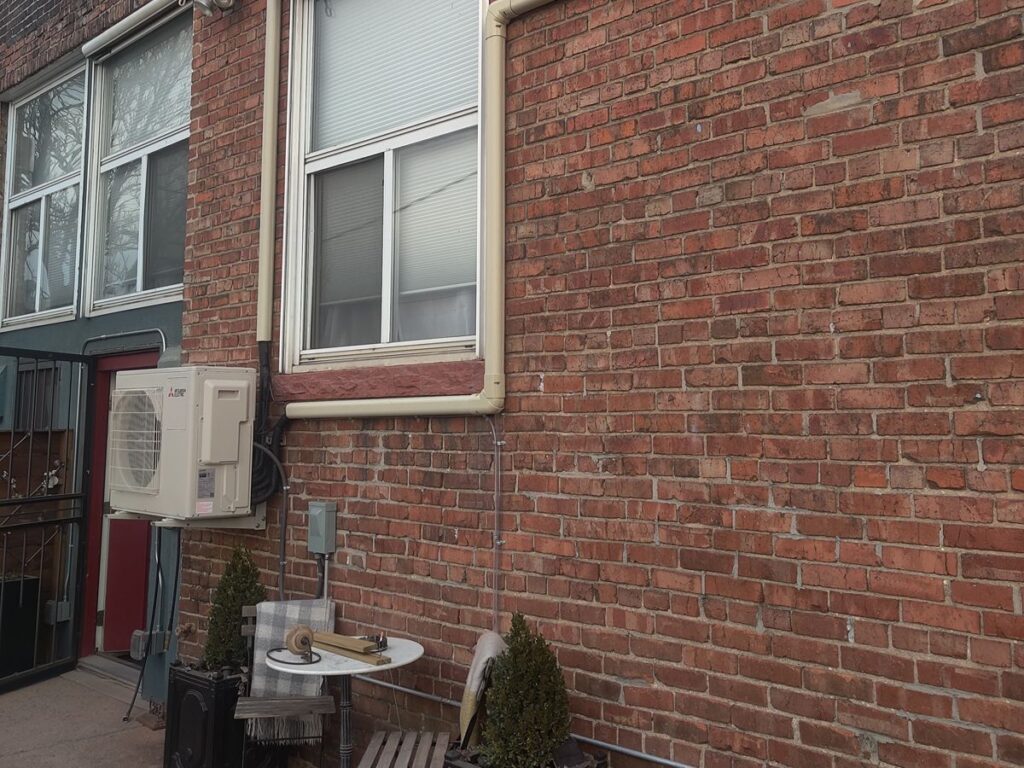
No. A standard ductless mini split is hardwired, not plugged into a wall outlet like a window unit or a space heater. Ductless systems pull power from a dedicated breaker in your panel, out to a weatherproof disconnect within sight of the outdoor unit, and into the condenser, which then feeds the indoor head. That disconnect near the outdoor unit is required by code so the system can be safely shut off for service.
The reason it can’t share an outlet comes down to how the system draws power. Most mini splits use an inverter-driven compressor that ramps up gradually, but they still draw a meaningful, sustained load, and on a shared circuit that competes with whatever else is on the line and can trip breakers. So the rule is one mini split, one dedicated circuit. Two units means two circuits.
There are a handful of true plug-in mini splits sold for do-it-yourself buyers, but that is a narrow exception, and even those still want a dedicated circuit rather than sharing a bedroom outlet. For a standard system, plan on hardwired.
Which is better for a mini split system, 120v or 240v?
Neither is universally better. The right voltage depends on the size of the unit you’re putting in. Smaller single-zone heads in the 9,000 to 12,000 BTU range often run on 120V, while units above 12,000 BTU and nearly all multi-zone systems typically need 208 to 240V.
There’s a real electrical reason larger units move to 240V. As voltage goes up, the current needed for the same power output drops, so the wire runs cooler and the circuit can be more compact for the same cooling and heating capacity. That’s why 240V is the common choice once you’re past a small single room.
For a Castle Rock home, the practical question is what your panel already has room for. A 120V unit can sometimes work with a modest new circuit, while a 240V unit uses a two-pole breaker and, in some homes, tips the panel over its comfortable limit. Buy the voltage variant that matches your unit and your panel rather than trying to convert between them, since step-up or step-down transformers just waste energy and add parts that can fail.
What size breaker do I need to run a mini split?
The breaker size comes from your specific unit, not its BTU rating. Every mini split’s outdoor condenser has a nameplate, and it lists two numbers that override any generic chart online. The Minimum Circuit Ampacity, or MCA, tells you the smallest wire and circuit the system can use. The Maximum Overcurrent Protection, or MOP, tells you the largest breaker allowed.
The rule is straightforward once you have those two numbers. The wire has to be sized to carry at least the MCA, and the breaker has to be equal to or smaller than the MOP. An undersized breaker will nuisance-trip every time the compressor starts, and an oversized one is dangerous because it may not trip during a fault, which risks overheating the wire.
You’ll see charts that say something like a 12,000 BTU unit takes a 15-amp breaker and an 18,000 BTU unit takes a 20-amp breaker. Treat those as ballpark only, because two units of the same BTU from different brands can have different specs. The install manual and the nameplate on the outdoor unit are what your installer and the Castle Rock inspector will actually go by, so pull those before buying wire or a breaker.
Do I need an electrical panel upgrade for a mini split?
Sometimes, but not always. A single small mini split on a new dedicated circuit often fits in a panel that has open breaker slots and spare capacity. The upgrade question comes up when your panel is already close to full, which is common in a fair number of Castle Rock homes.
This is where the local housing stock matters. Some older homes here, especially those near the historic downtown, still carry 100-amp panels, and the oldest may have 60-amp service or fuse boxes. Add a multi-zone 240V system to a panel that’s already running central air, an electric range, and an EV charger, and you may not have the headroom for it. Warning signs like nuisance tripping or lights that dim when big appliances start can point to a panel that’s maxed out.
If an upgrade is needed, it’s electrical work, so a licensed electrician pulls its own permit and the panel has to meet current code, including AFCI and GFCI protection where it applies. Costs vary a lot with your home, and quotes for a standard 100-amp to 200-amp upgrade in the Denver metro range widely, with some contractors quoting in the $2,500 to $4,500 range installed and others coming in higher or lower depending on whether the service mast or meter needs rework. The only way to know your number is a look at your actual panel and load.
Adding cooling to a room the ductwork never reached is one of the most common comfort problems we see in Castle Rock homes, and the electrical setup behind a mini split is usually what determines the true scope of the job. As a technician-owned company handling ductless mini split installation in Castle Rock, we manage the heating and cooling side and coordinate the rest so the system is sized right and permitted correctly from the start. If you’re weighing a mini split, reach out to Alpha Air Heating & Cooling at (720) 284-9566 for a free estimate and we’ll walk your home to see what it actually needs.