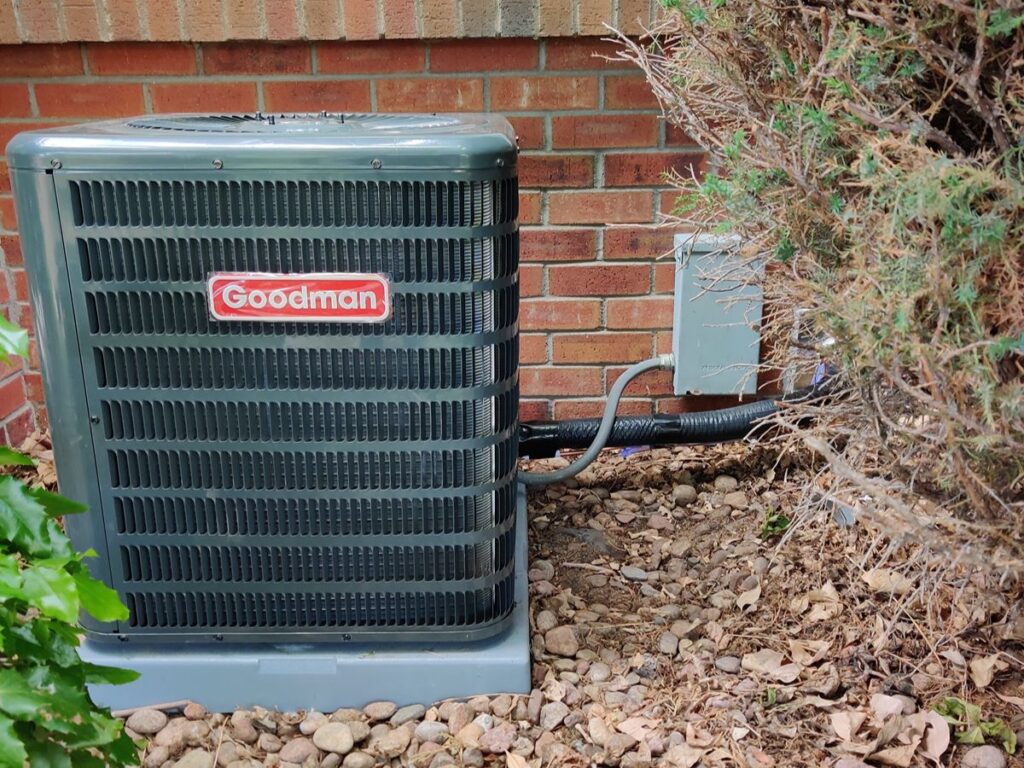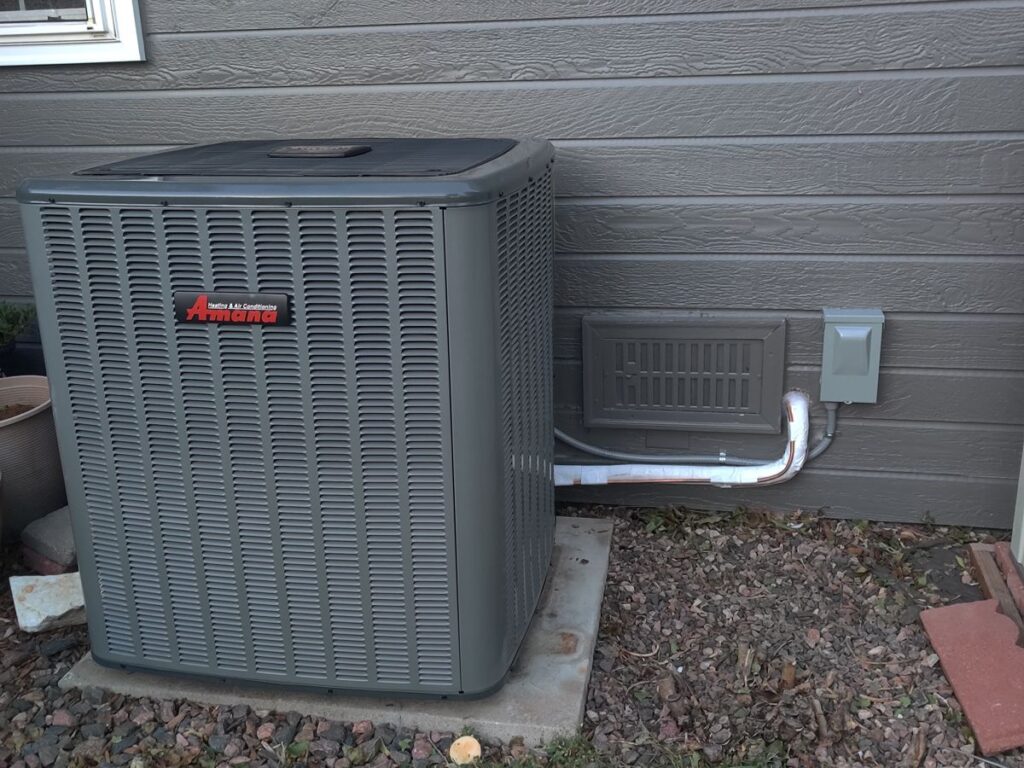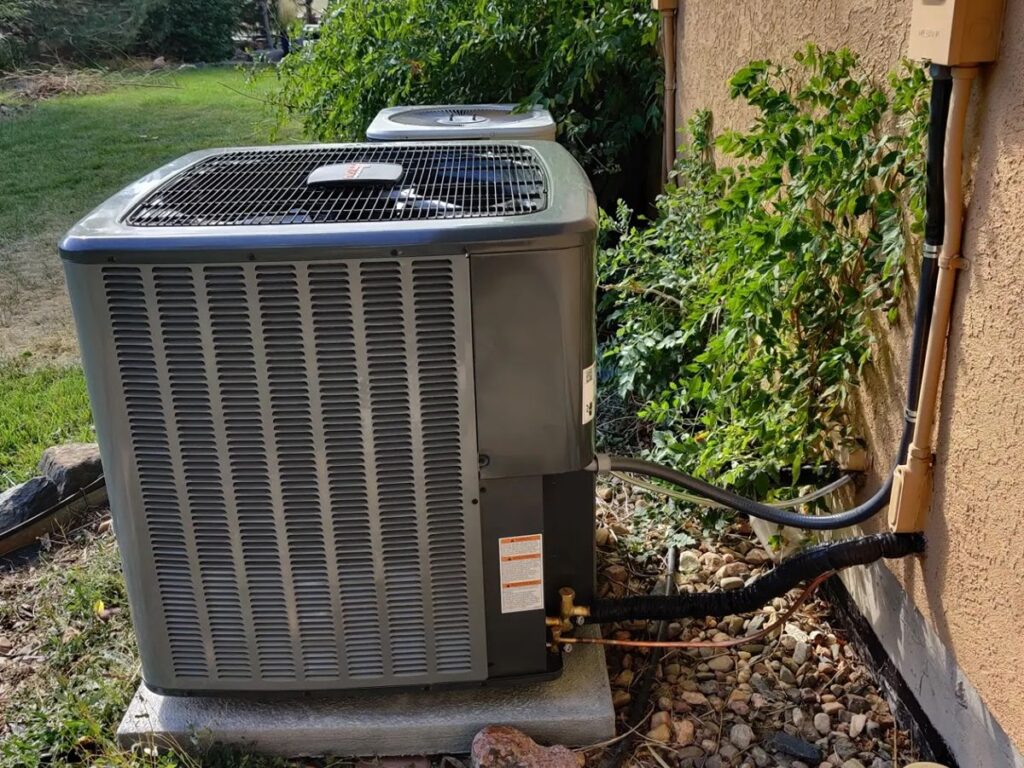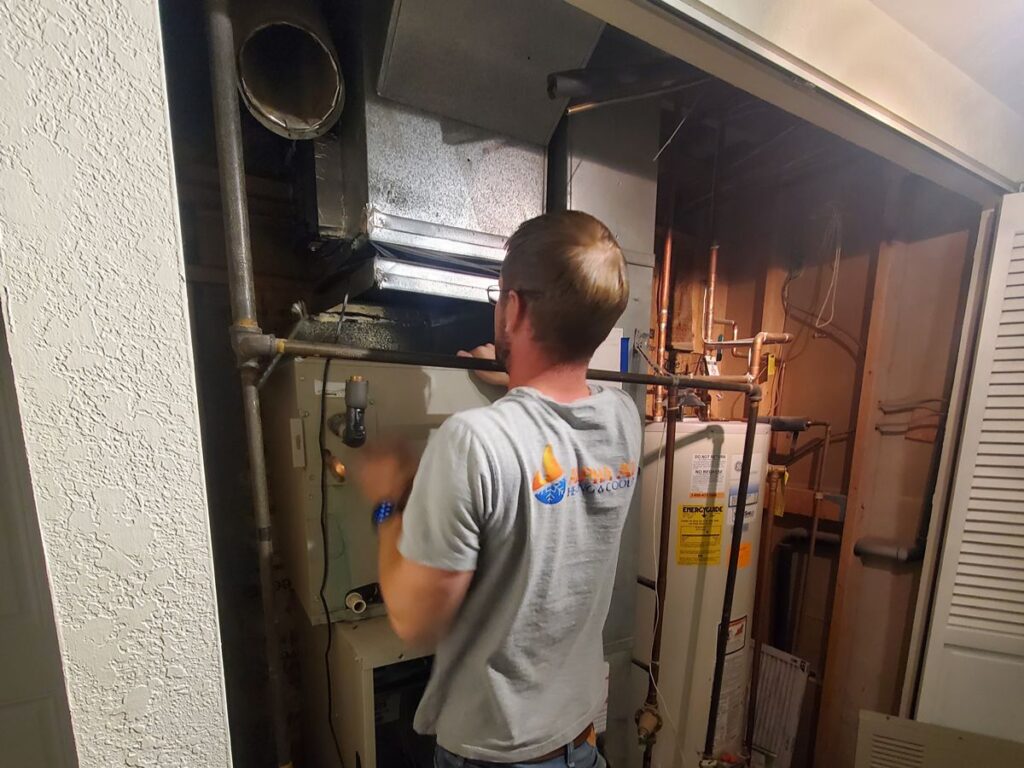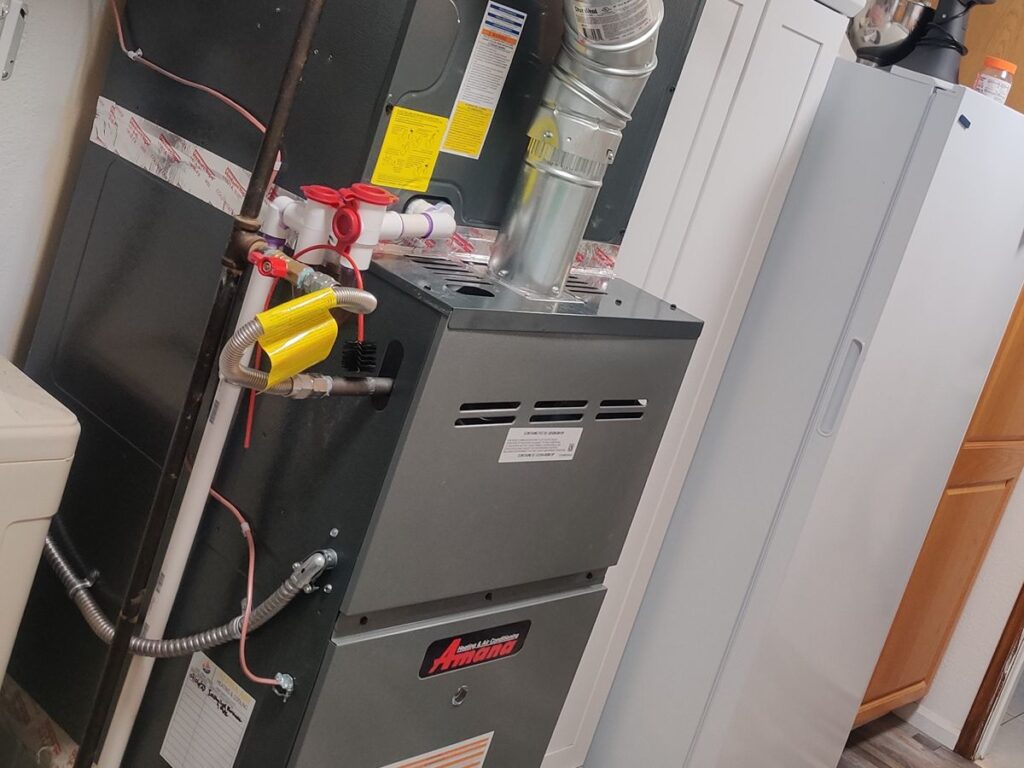
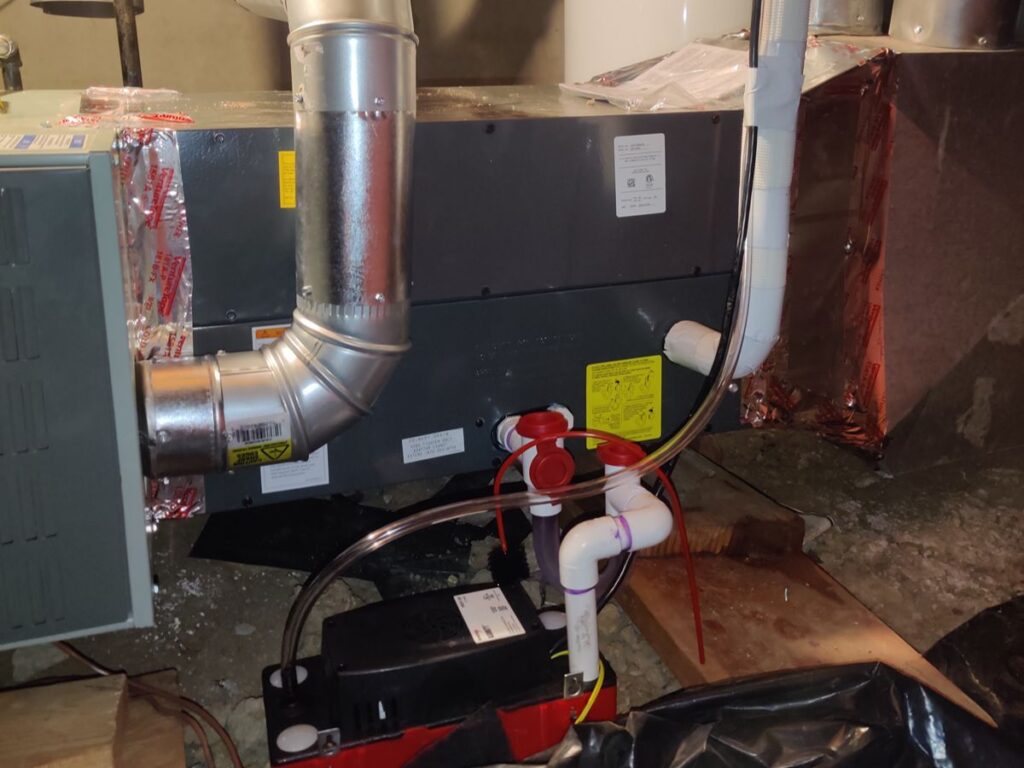
At Castle Rock’s elevation of about 6,224 feet, the thinner air pulls real performance out of both your furnace and your air conditioner, and a gas furnace has to have its heat output dialed back by roughly 17 percent compared to how it would run at sea level. That is not a defect. It is simple physics, and any system installed here has to account for it.
Living over a mile up, you feel the thin air on a walk up a hill. Your equipment feels it too, all day and all year, because it was engineered and rated at a sea-level factory that never saw the Front Range.
The short version is that higher elevation means lower air pressure and fewer air molecules in every cubic foot. At 5,280 feet in Denver, the air density is approximately 82.5% of what it is at sea level, which means for every cubic foot there are fewer air molecules available to transfer heat. Castle Rock sits nearly a thousand feet higher than that, so the effect is a little stronger here. A furnace burns fuel with less oxygen, an AC coil has less air mass to pull heat out of, and the blower moves less actual air even when the fan spins the same speed. Every one of those things has to be corrected during sizing, installation, and setup, or the equipment either underperforms or runs unsafe.
The local conditions push this further. Castle Rock is high, cold in winter, and very dry, and the Town of Castle Rock enforces the International Fuel Gas Code for gas appliance work, which is the code that spells out how burners have to be adjusted for elevation. That combination of thin air, real winters, and code-driven combustion setup is exactly why altitude belongs in the conversation before you buy or repair anything. If you want a broader look at the HVAC services we handle across heating and cooling work in the area, that is a good place to start.
What is the altitude correction factor for HVAC systems?
The altitude correction factor is a number that tells you how much of a system’s sea-level rating you actually get at your elevation. Altitude correction for HVAC is the process of adjusting air-side assumptions to account for the reduction in atmospheric pressure and air density that occurs at elevation. It comes from comparing the air density at your site to standard sea-level density. In Manual J and Manual S design work, the ACF is a number between 1.0 at sea level and lower values as altitude climbs.
For a place around 5,000 feet, the factor lands near 0.83 to 0.86, and Castle Rock at roughly 6,224 feet runs a bit lower still. In practice, if 1,600 CFM of standard air is needed and the correction factor is 0.83, the system actually has to move about 1,928 CFM of that thinner high-elevation air to do the same work. That is why a design that ignores altitude here will fall short even when the equipment is technically the right size on paper.
What is the purpose of the correction factor?
The purpose is to keep the equipment matched to your home so it actually delivers the heating and cooling the load calculation calls for. HVAC systems designed with sea-level assumptions fail at elevation due to reduced air density, leading to underperformance in airflow and heat transfer. The correction factor turns the manufacturer’s sea-level numbers into numbers that mean something at 6,224 feet, so a furnace and AC picked for a Castle Rock house are truly the right capacity and not just the right capacity somewhere near the ocean.
It also protects against sizing errors that thin air hides. Skip the correction and you can end up with a unit that short cycles, struggles on the coldest and hottest days, or runs far longer than it should to hit the thermostat. Applying the factor during selection is how we make sure the load, the ductwork, and the equipment all line up for the real air you have here.
Does altitude affect refrigerant pressure?
Yes. Lower atmospheric pressure changes how refrigerant behaves and, just as important, how it reads on a technician’s gauges. Because lower atmospheric pressure shifts how refrigerant gauge pressures register, sea-level charging charts give false readings to untrained technicians. A tech who charges an AC or heat pump straight off a standard chart up here can leave the system over or undercharged, which shows up as weak cooling, higher bills, and extra wear on the compressor.
The fix is method, not luck. Getting a system charged correctly in Castle Rock means using precise superheat and subcooling calculations tailored to the local elevation. One local example of how small charge and valve issues masquerade as big problems came from Andrew C., who left us a Google review after another company pushed expensive, damaging repairs on his AC; when we looked, “We called Kyle and he professionally and quickly diagnosed the issue with our unit which turned out to be a leaking Schrader valve”, and a quick, correct fix put him back in cold air. On any AC repair or new install, our techs verify the charge with instruments instead of trusting a chart printed for sea level.
What is the correction factor for gas?
For gas furnaces the correction is a derate, meaning we intentionally reduce the fuel input so combustion stays clean in thin air. For operation at elevations above 2,000 feet the density of air is reduced, so the furnace should be derated at the rate of four percent for each 1,000 feet above 2,000 feet of elevation. At Castle Rock’s elevation that works out to a reduction of roughly 17 percent off the nameplate input. Failing to derate causes incomplete combustion, heat loss, and dangerous carbon monoxide production, which makes an improperly set unit a real life-safety issue, not just an efficiency one.
In the field that means a manufacturer high-altitude kit, correct burner orifices, and the right manifold gas pressure, all verified with a combustion analyzer rather than eyeballed. Manufacturers address altitude with high-altitude kits or burner orifice changes that reduce fuel flow to match the available oxygen, and technicians verify gas pressure and combustion with instruments. This is code work here, since the Town of Castle Rock enforces the International Fuel Gas Code, and we pull the permit and handle the inspection as part of the job. When it makes sense for a home, a right-sized indoor air quality setup can ride along with a furnace project so the thin, dry winter air is easier to live in too.
Altitude is not something you can shrug off in a Castle Rock home, because at 6,224 feet a furnace or AC set up for sea level will run wrong from day one. As a NATE-certified, technician-owned company here in Founders Village, we size to the load, derate the burners to code, and charge refrigerant by superheat and subcooling for this exact elevation, so the system does what it is supposed to. If you want to know how your current equipment is really performing, reach out to Alpha Air Heating & Cooling for a free estimate or diagnostic visit at (720) 284-9566.