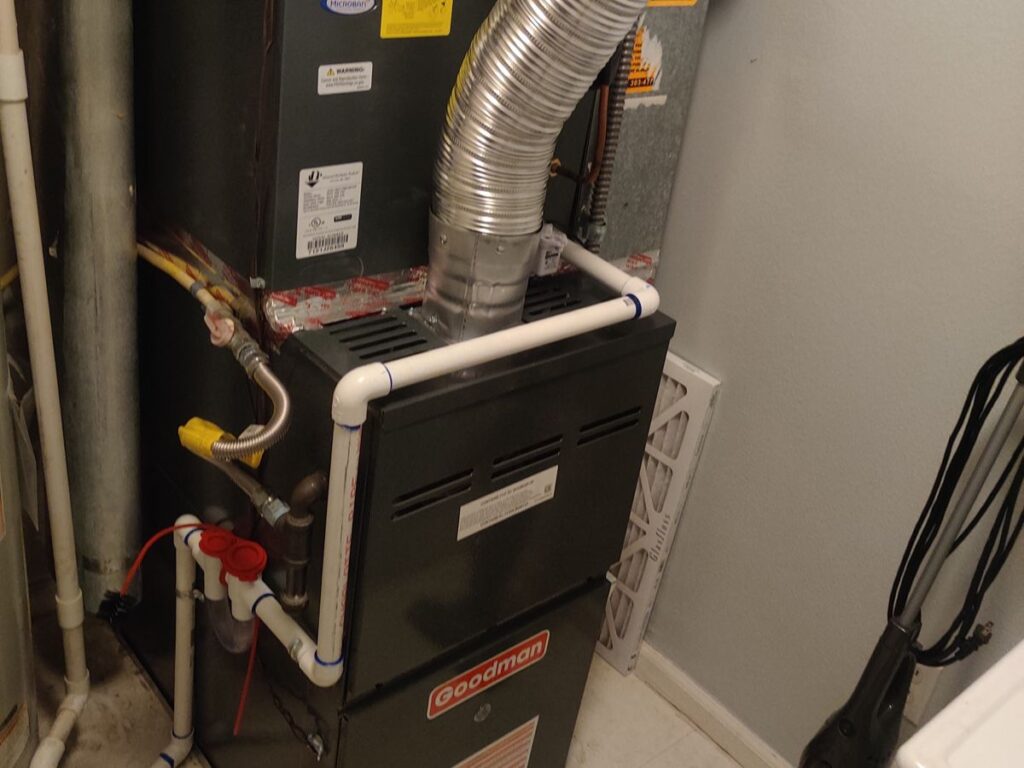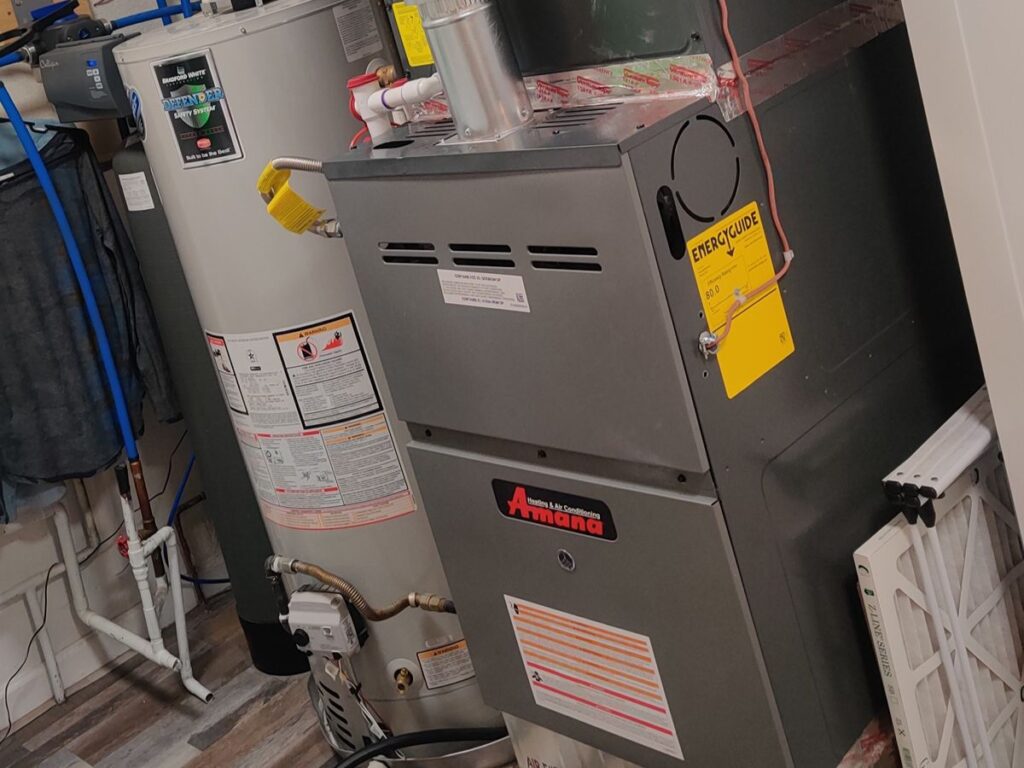
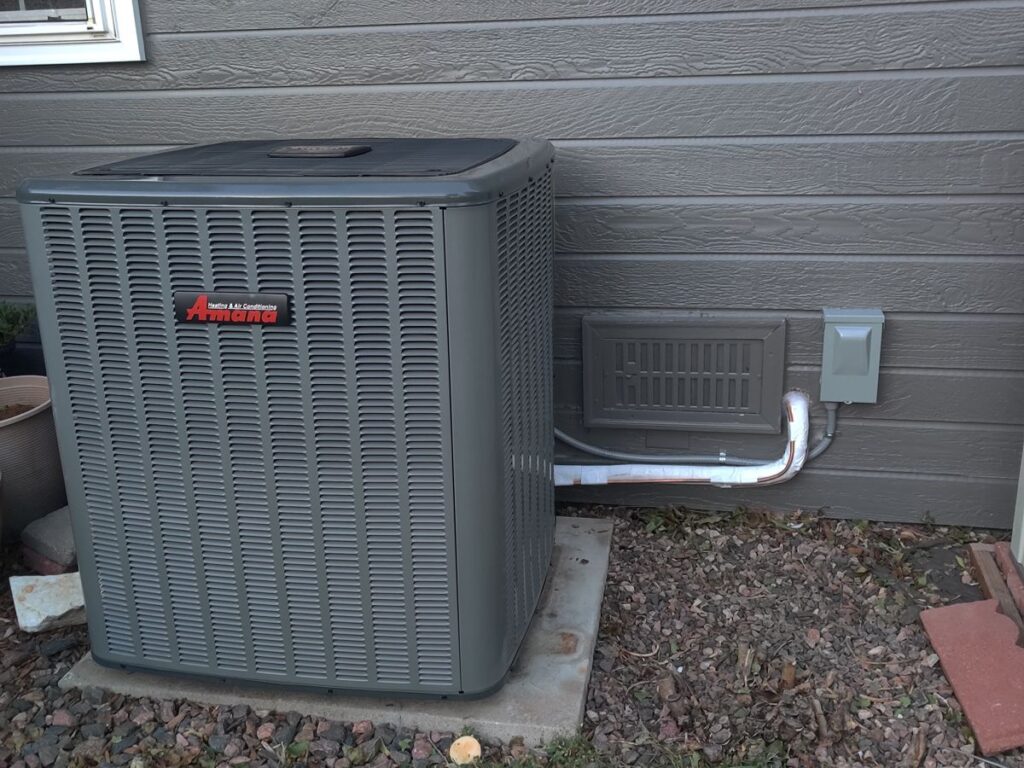
To keep your HVAC system from freezing up during Castle Rock’s wild temperature swings, don’t run the AC when it’s cool outside, keep a clean filter in the unit, and get the refrigerant charge checked once a year. Around here the gap between the afternoon high and the overnight low can reach 21 to 26 degrees. That kind of day-to-night drop is exactly what catches homeowners off guard.
Picture a warm April afternoon in Founders Village when you switch the AC on for the first time all year. By 11 p.m. the temperature has fallen back toward freezing, and if the system is still running, ice can start forming on the coil. It’s one of the most common early-season calls we get.
Most people assume a freeze-up means something dramatic broke. Usually it doesn’t. A frozen coil is almost always the system telling you that airflow is low, the outdoor temperature is too cold for cooling, or the refrigerant charge is off. Each of those has a clear fix, and none of them require guessing if you know what to look for. The trick in Castle Rock is that our thin, dry, high-altitude air and our huge daily temperature range make a couple of those triggers more likely than they’d be in a steadier climate.
There’s also a lot of confusion because a heat pump can grow frost in winter and that’s completely normal, while an air conditioner that ices over is not. Those are two different things, and telling them apart is the first step to preventing a real problem. Below we walk through what’s normal, what’s not, and how to protect your equipment through the swings.
Is it normal for the outside AC unit to freeze in winter?
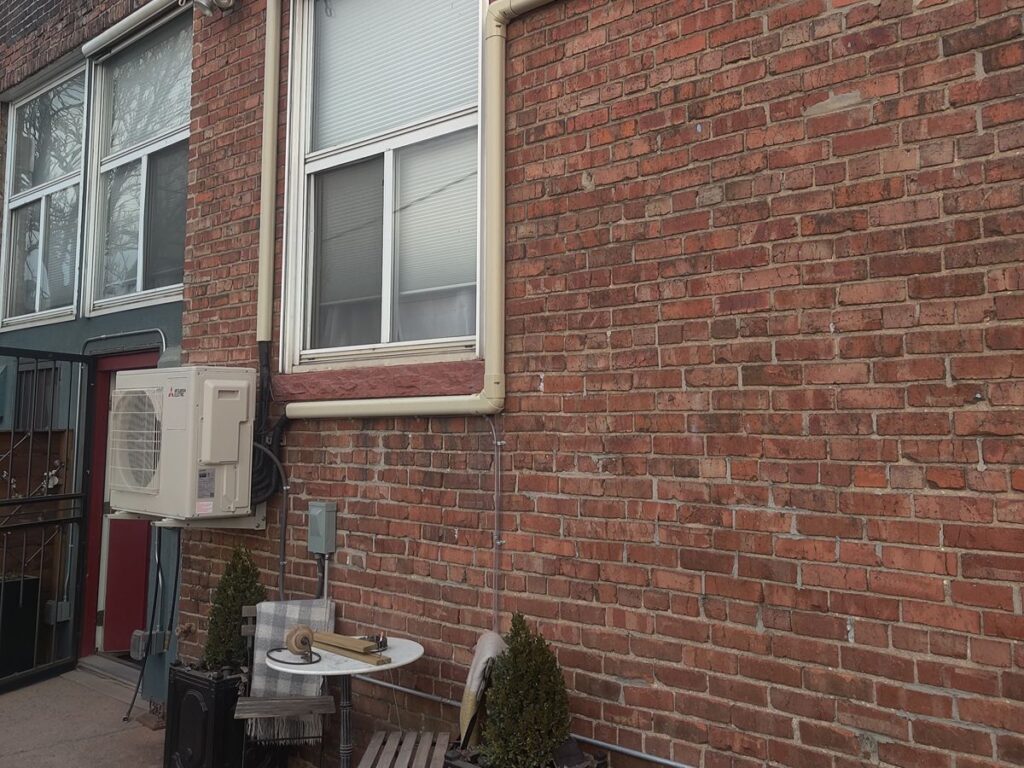
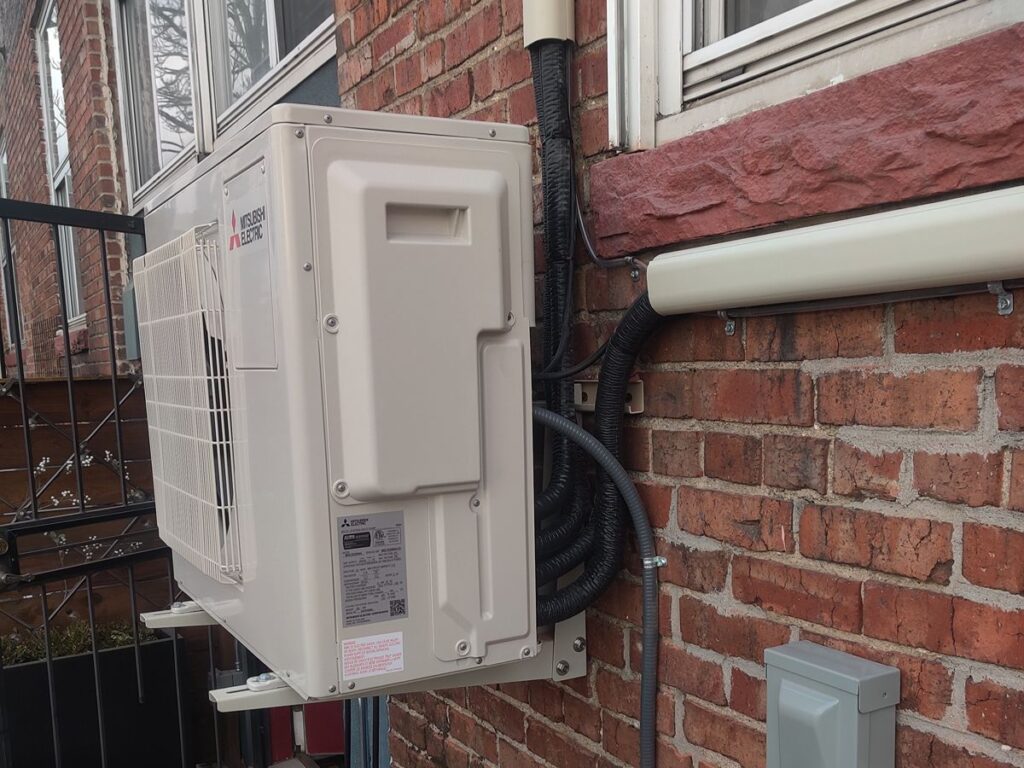
A standard air conditioner should not be running in winter at all, so no, ice on a straight AC in the cold is not normal and points to a problem or a system left on when it shouldn’t be. But if you have a ductless mini-split or a heat pump, light frost or a thin layer of ice on the outdoor unit during a cold Castle Rock morning is completely normal. Those systems pull heat from outside air to warm your home, and frost naturally builds on the outdoor coil while they do it.
Here’s the key difference. A heat pump has a built-in defrost cycle that senses the ice and briefly reverses to melt it, so the frost comes and goes on its own. You may even see steam rising off the unit during a defrost. An air conditioner has no such job in winter. With our January lows often dropping well below freezing, if you see heavy ice on a cooling-only unit, something is wrong or the system is running when it should be shut down for the season.
What causes an outside AC unit line to freeze up?
When you see ice on the line running to your outdoor unit, that’s a symptom, not the source. The freeze almost always starts on the indoor evaporator coil, then creeps out along the refrigerant line to where you can spot it. So the real question is what’s chilling that indoor coil too far.
The most common causes we find in Castle Rock homes are:
- Low airflow over the coil. A clogged filter is the usual culprit, and our dry, dusty high-altitude air loads filters faster than most people expect. Blocked return vents, a weak blower, or too many closed registers do the same thing.
- Running the AC when it’s too cold outside. On those big-swing days, the evening chill drops coil temperature until condensation freezes.
- Low refrigerant from a leak. A low charge drops the pressure in the coil, which drops its temperature below freezing.
A local homeowner, Andrew C., left us a Google review after his AC blew warm air the first time he turned it on for the year; the cause turned out to be a small leak we tracked down: “We called Kyle and he professionally and quickly diagnosed the issue with our unit which turned out to be a leaking Schrader valve”. That kind of slow leak is a classic freeze-up trigger, and it’s not something to guess at. If you want the full picture on airflow, filters, and charge, our team handles it under AC repair and maintenance.
At what temperature does an AC unit freeze up?
As a rule of thumb, running a standard air conditioner when the outdoor temperature is below about 60 degrees Fahrenheit raises the risk of a freeze-up. That number is a guideline, not a hard cutoff, since coil temperature also depends on the refrigerant charge, airflow, and how long the system runs. But 60 is a useful line to keep in your head.
This is where Castle Rock’s climate really matters. Our afternoons can climb into the 70s or 80s in spring, then fall back toward freezing overnight, and that swing regularly crosses the 60-degree threshold in a single day. A system that ran fine at 3 p.m. can be icing over by midnight. The simplest habit is to leave the AC off until daytime highs settle into steady warm weather, and to not run cooling on cool evenings just to move air. If you want fresh air circulating on a cool night, use the thermostat fan setting instead of the cooling mode.
Is my AC ruined if it freezes up?
No. A single freeze-up rarely ruins an AC, but running the system while it’s frozen can damage the compressor, and that’s the expensive part. So the moment you notice ice, shut the system off at the thermostat and let it fully thaw before you do anything else. Never chip or scrape ice off the coil, because that can puncture it and cause a refrigerant leak, turning a small problem into a big one.
Once it’s thawed, replace the air filter and turn the system back on. If it cools normally and stays ice-free, a dirty filter was likely the whole story. If it freezes up again after a clean filter, that usually points to a refrigerant leak, and topping off refrigerant without fixing the leak is a temporary patch at best. That’s a job for a licensed tech, both because of the diagnosis involved and because handling refrigerant requires EPA certification. You can reach us anytime through our contact page to get it checked properly.
When to book a professional look
If your AC keeps freezing after you’ve changed the filter, if you see oily residue near the coil, or if cooling has slowly gotten weaker over a season, those are all signs to bring in a pro rather than keep resetting the system. Repeat freeze-ups almost always mean a charge or leak issue that a homeowner can’t safely diagnose.
A yearly spring tune-up is the cheapest insurance against all of this. We check the refrigerant charge, clean the coil, confirm airflow, and catch a small leak before the first hot week, which is when freeze-up calls spike across Douglas County. As a technician-owned company offering air conditioning service in Castle Rock, we know how the local swing pattern stresses equipment. Getting ahead of it in spring is far easier than chasing ice in July.
Learn what’s really going on with your system
Castle Rock’s day-to-night temperature swings put a strain on cooling equipment that steadier climates never see, and a freeze-up is often the first warning that airflow or refrigerant is off. We’re a NATE-certified, EPA-certified local team that diagnoses the actual cause instead of guessing, whether that’s a clogged filter, a low charge, or a slow leak. If your unit is icing up or just not cooling the way it should, reach out to Alpha Air Heating & Cooling at (720) 284-9566 for a free estimate or a diagnostic visit.