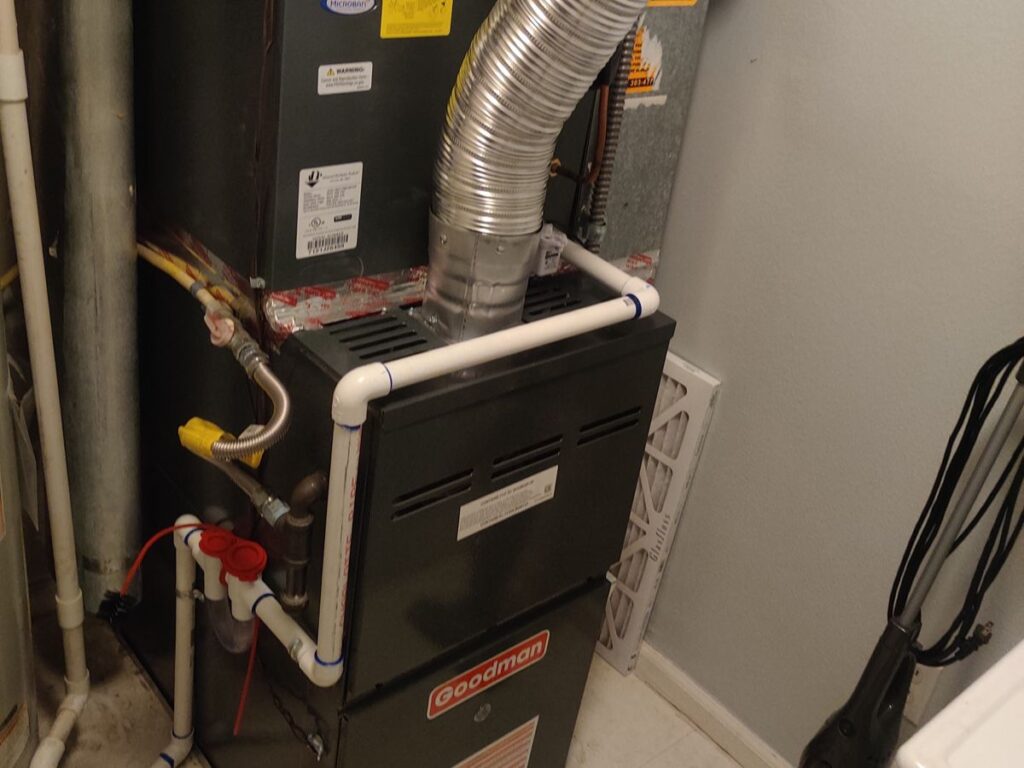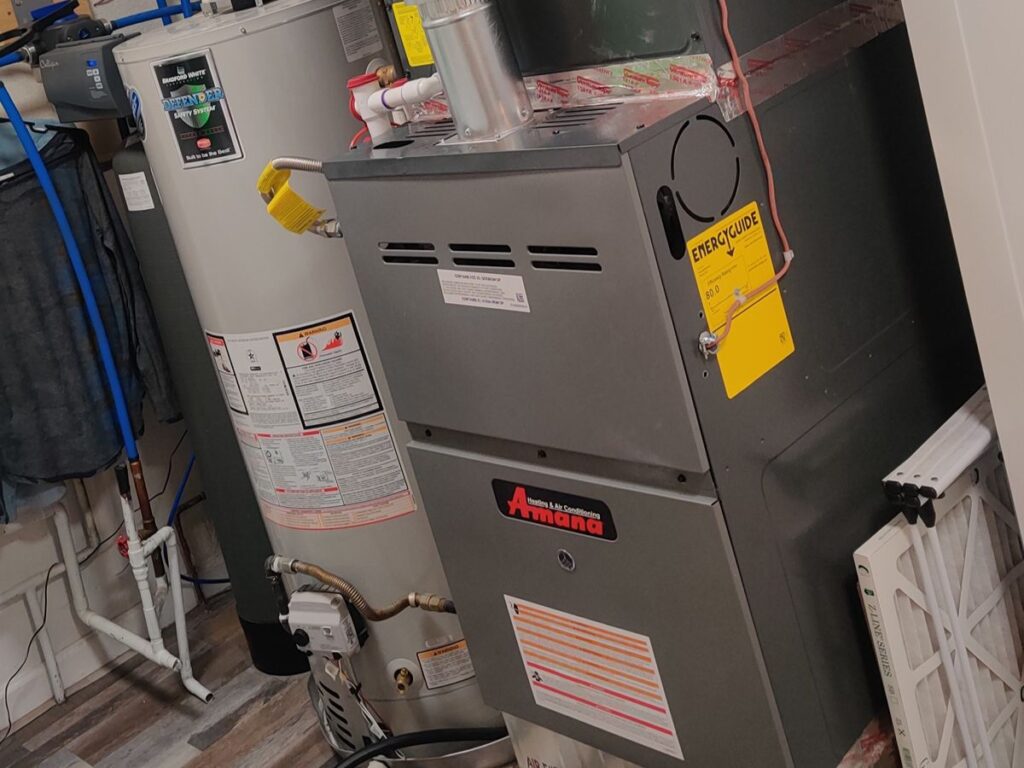
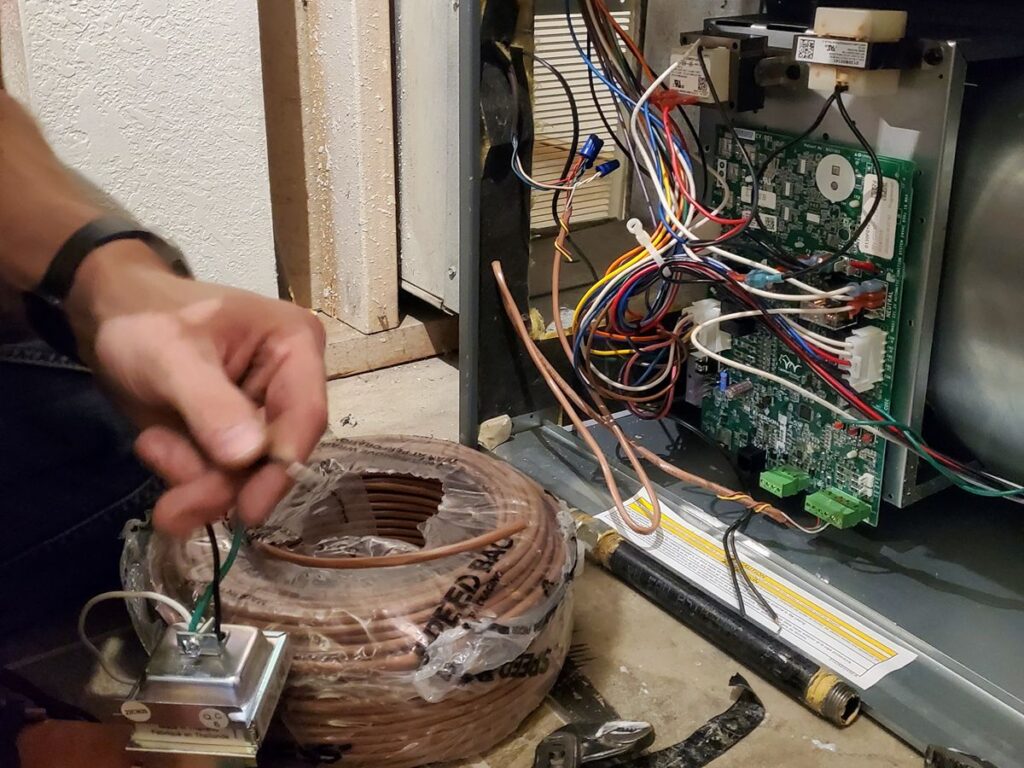
Before you call anyone in Castle Rock, run through a short list: confirm the thermostat is set to heat and reading right, check that the furnace switch and breaker are on, look at your air filter, and make sure the furnace door panel is fully seated so the safety switch engages. Half the “no heat” calls we get during a cold snap trace back to one of those, and with January lows in Castle Rock often dropping near or below freezing, five minutes of checking can save you a service visit.
Winter here does not ease off. The average winter temperature in Castle Rock sits around 28 degrees, and cold snaps can push overnight lows well below zero, which means your furnace runs hard for months on end from October through April. That constant cycling is exactly when small problems show up.
Most no-heat situations fall into one of a few buckets: a tripped safety, a thermostat that lost its settings or its batteries, a clogged filter choking airflow, or a part that has actually worn out. The first three you can often sort out yourself in a few minutes. The last one needs a technician. Knowing which is which before you pick up the phone helps you describe the problem clearly and, in a lot of cases, get your heat back without paying for a visit at all.
One thing specific to homes at this elevation and in this dry winter air: filters load up faster than people expect. Forced-air heat pulls a steady stream of dust and pet dander through the system, and a filter left in too long restricts airflow, overheats the furnace, and can trip the high-limit switch, which shuts the unit down as a safety measure. Checking that filter first is never wasted effort.
Will resetting my furnace fix the problem?
Sometimes, and it is worth trying before you call. Most furnaces have a power switch that looks like a light switch, usually on or near the unit. Flip it off, wait about 30 seconds, then flip it back on. You can also reset at the breaker. A reset clears a temporary lockout, which is a safety state the control board enters after a few failed ignition attempts, and if the underlying issue was a one-time hiccup, the furnace will fire back up and run normally.
Here is the honest part. A reset that holds means the furnace worked through whatever briefly tripped it. A reset that lasts a few minutes and then locks out again is telling you a real part is failing, often the igniter or flame sensor. On a modern furnace, the hot surface igniter is one of the more common failure points, and no amount of resetting brings a cracked one back. If you have reset twice and it will not stay running, stop there and have it looked at, because repeated relighting attempts strain the system. You can reach us through our furnace repair and maintenance page.
How do I know if it is the thermostat or the furnace?
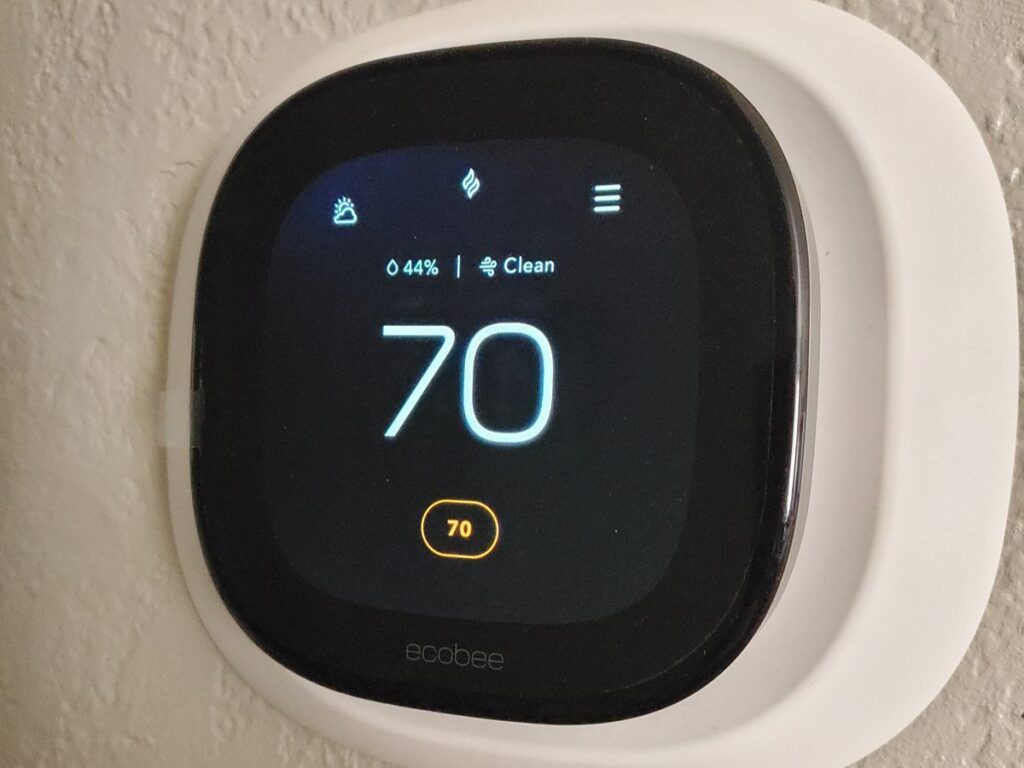
Start at the thermostat, because it is the cheaper thing to rule out. Set it to heat, then push the target temperature five degrees above the current room reading and wait a minute. If the display is blank or glitchy, replace the batteries first, since a dying battery is a common and easy fix on many wall thermostats. If the screen looks fine but nothing happens, listen at the furnace for a click or a fan.
A quick way to separate the two: if you hear the furnace try to start, cycle, or click when you raise the thermostat, the signal is getting through and the problem is likely at the furnace itself. If you hear absolutely nothing and the furnace switch and breaker are both on, the thermostat or its wiring is a strong suspect. Loose thermostat wiring and failed batteries account for a fair share of “dead” furnaces that turn out to be fine. If you are still not sure after those steps, that is a normal point to bring in a technician who can meter the low-voltage signal and settle it in a few minutes.
What are the signs of a dying furnace?
A furnace rarely quits without warning. Watch for these before it leaves you cold on a single-digit Castle Rock night:
- Age past 15 to 20 years. Most gas furnaces last in that range, and in a climate where they run heavily for six-plus months, expect the lower end.
- Repairs stacking up. If you are paying for a fix more than once a season, the running total starts to rival the cost of replacement.
- Yellow or flickering burner flame instead of steady blue, which can point to a combustion problem.
- Banging, screeching, or rumbling on startup, and short cycling where it turns on and off every few minutes.
- Rooms that never quite warm up, or a winter gas bill that keeps climbing with no rate change. A furnace that has lost efficiency quietly burns more gas, and the swing is real in Colorado. Colorado State University Extension notes that older units here can run as low as 56 percent efficient while newer ones reach nearly 99 percent, and in their DOE based example the gap between a 70 percent and a 90 percent efficient furnace works out to about $22 saved for every $100 spent on heating, close to a 22 percent difference tied purely to how well the furnace burns fuel.
One warning sign is not a maybe. If your carbon monoxide alarm goes off or you suspect a cracked heat exchanger, shut the furnace off and call for service right away. That is a safety issue, not a comfort one. When the signs are pointing toward the end of the road, it is worth comparing a repair against a new system on our furnace installation and replacement page rather than sinking money into a unit on its last season.
Who do you call to check your furnace?
Call a licensed, insured HVAC contractor who works in Castle Rock and knows the local code. Around here, furnace work falls under the Town of Castle Rock Building Division, since the county’s building division only issues permits for unincorporated areas of Douglas County, and a proper contractor pulls those permits as part of the job rather than leaving it on you. Ask up front whether there is a diagnostic fee, since across the Front Range a service or diagnostic visit commonly runs somewhere around $79 to $150, though many companies, including ours, offer a free estimate on the work itself.
Look for real credentials, not just a truck and a phone number. We are NATE certified in gas heating and air conditioning service and installation, EPA Section 608 Universal certified, we are BBB accredited with an A+ rating, and we are technician-owned, with a founder who has more than 14 years in the trade before starting the company here in 2022. Speed matters too when it is cold. Mark B. left us a Google review after his furnace stopped putting out enough heat during a cold spell, noting that “To our surprise, they came out that evening, diagnosed the problem, and had our furnace running again at peak efficiency”. That kind of same-evening response is what you want in the middle of a Castle Rock winter.
When your furnace is short cycling or leaving the house cold on a below-freezing night, the last thing you want is to guess your way through it or wait days for help. For furnace repair in Castle Rock, CO, we diagnose the actual cause, walk you through what we find, and handle repair, maintenance, or replacement across our full range of home heating services, permits included. Call Alpha Air Heating & Cooling at (720) 284-9566 to set up a free estimate or a diagnostic visit, and we will get your heat back on track.